
Acupuncture and Cupping
Acupuncture and Cupping, more than half of the ills cured” is a famous Chinese saying, supporting traditional Chinese medicine.
Cupping is one of the treatments that are practised in Chinese medicine, alongside acupuncture, moxibustion, herbal remedies and Tui Na (Chinese massage). Generally, it is combined with acupuncture, but it can be used on its own. Cupping is used to relieve back and neck pain, stiff muscles, anxiety, fatigue, migraines, rheumatic and arthritic conditions, menstrual and digestive conditions and respiratory problems.
The suction provided by cupping loosens muscles and encourages blood flow, especially in localised areas of pain and stiffness, it also calms the nervous system so helping reduce high blood pressure and reduce anxiety.
Cupping is one of the best deep-tissue therapies available. It can affect tissues up to four inches deep. It releases toxins, moves blockages and improves circulation. Cupping clears congestion in the lungs from a cold and reduces coughing and tight chest in a chest infection and asthma. It removes toxins and improves blood flow through veins and arteries, it is very beneficial for muscle spasm in athletes. It benefits the digestive system, improves metabolism, relieves constipation and improves digestion.
Cupping used to be used regularly in British hospitals in the 1800s for contagious diseases. In China, the first use of cupping was documented 3000 years ago for the treatment of pulmonary tuberculosis. It is still widely in use in many Mediterranean countries.
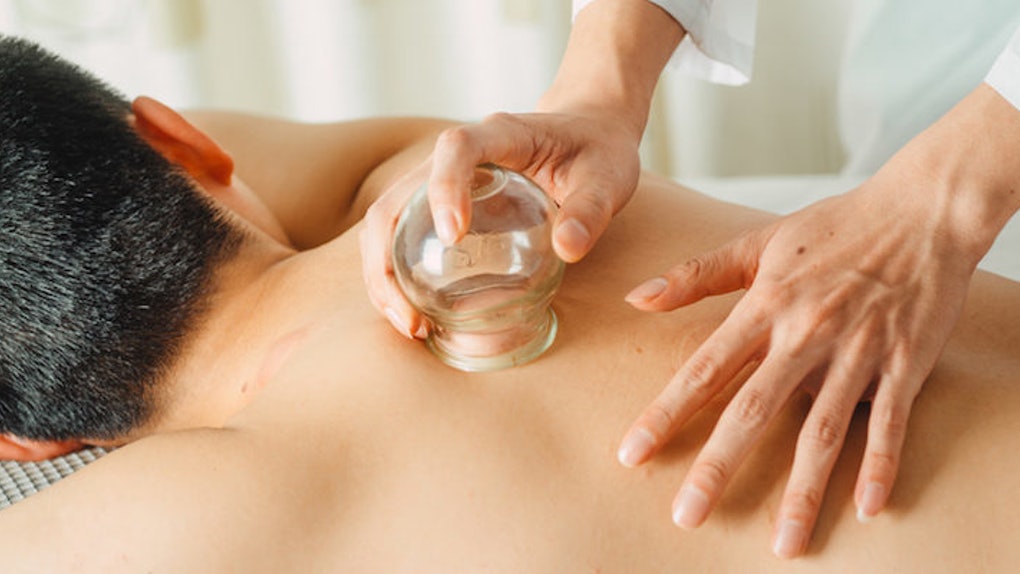
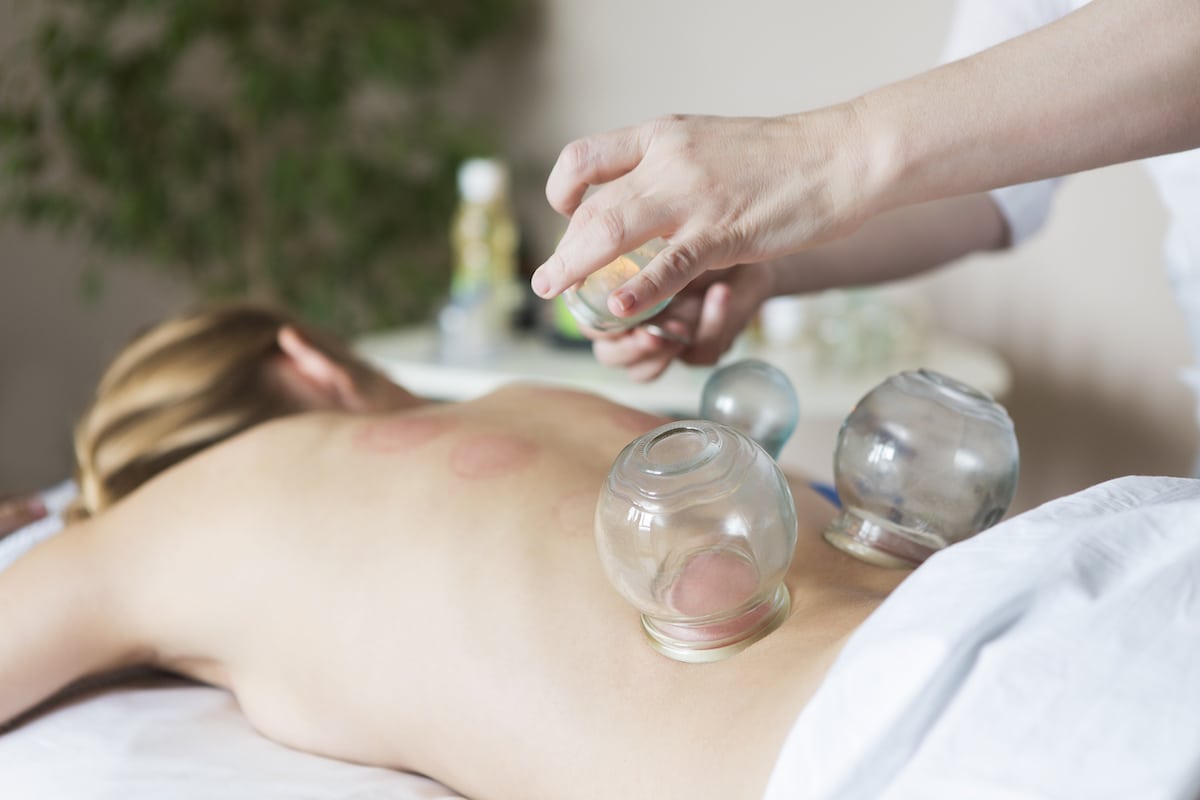
Cupping is the term used for the technique of applying glass, silicon, plastic or bamboo cups as suction devices to the skin. The practitioner starts by applying a light application of oil to the skin and then selecting the number, size and type of cup best to use, this depends on the problem, it’s location, the size and age and health of the patient. The traditional method of cupping creates a vacuum by placing a flame inside the cup and then applying the cup to the skin, as the air inside the cup cools it contracts and creates the suction, this sucks up the skin and tissues creating a pulling sensation. This sensation is usually very pleasant and helps relieve tight and sore muscles. The cups are usually left on for about 10 minutes and then removed, the area is lightly massaged after cupping. This technique is known as “dry cupping”. A more modern method uses vacuum cups, where the air is drawn out of the cup using a suction pump, this requires no flame and allows for more careful control of the degree of suction.
“Gliding cupping” is a technique where the cup is used to give a deep massage. Glass cups are used on well-oiled skin, once the suction is created the cup or cups are moved over the tight or sore area to give a very deep massage, this can be quite intense, but very relieving.
Cupping is like the inverse of massage, rather than applying pressure to the muscles, it uses suction to pull the muscles upwards. This is usually a relaxing and relieving sensation.
Cups can be used on their own or in conjunction with acupuncture. When used with needling the cups are placed over the inserted acupuncture needles, enhancing their effect. The treatment of a cold or asthma requires the combination of acupuncture with cupping.
The side effects are mild, the technique can leave mild bruising or “cupping marks”, these clear within the week and usually sooner.

